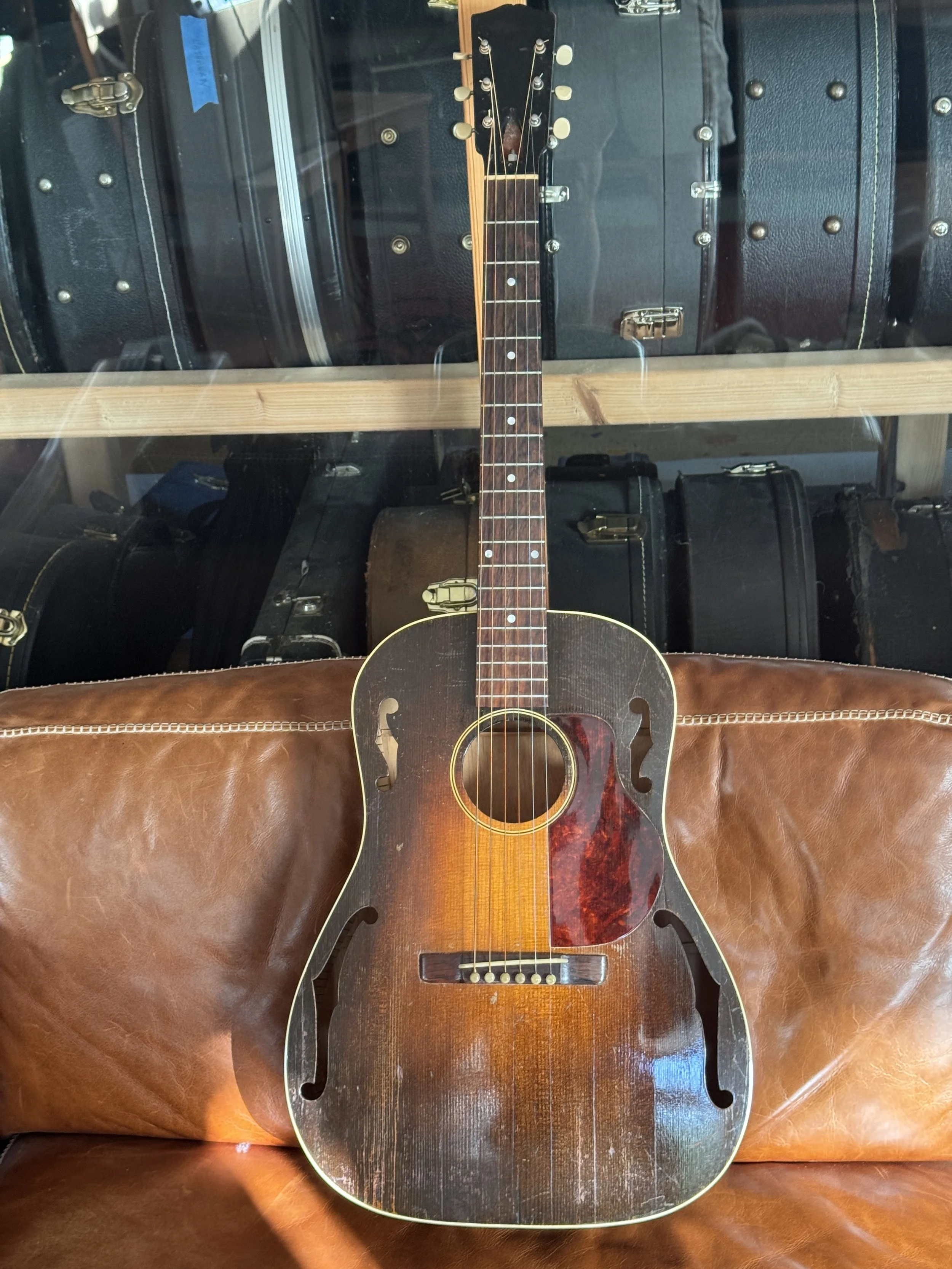
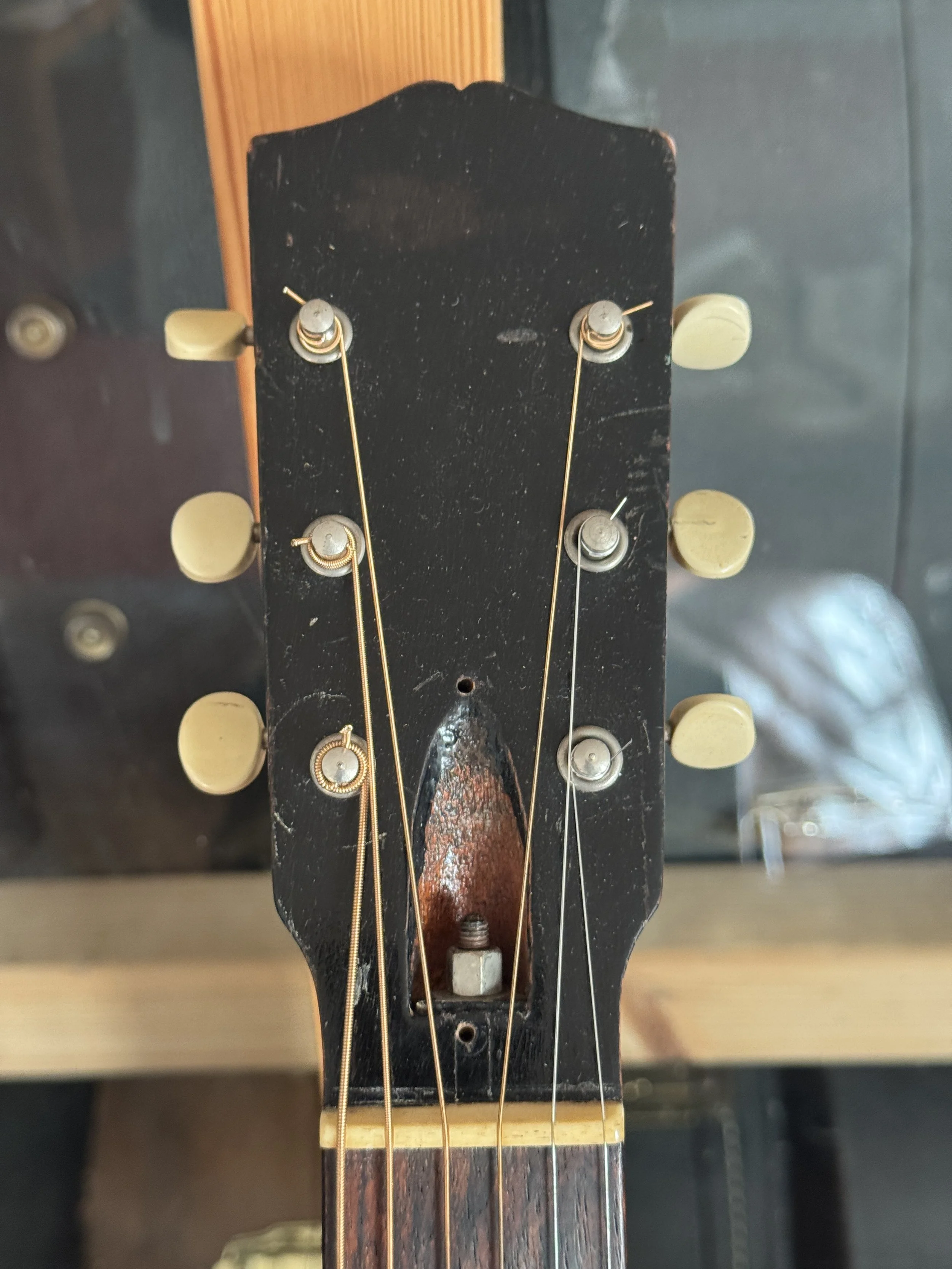
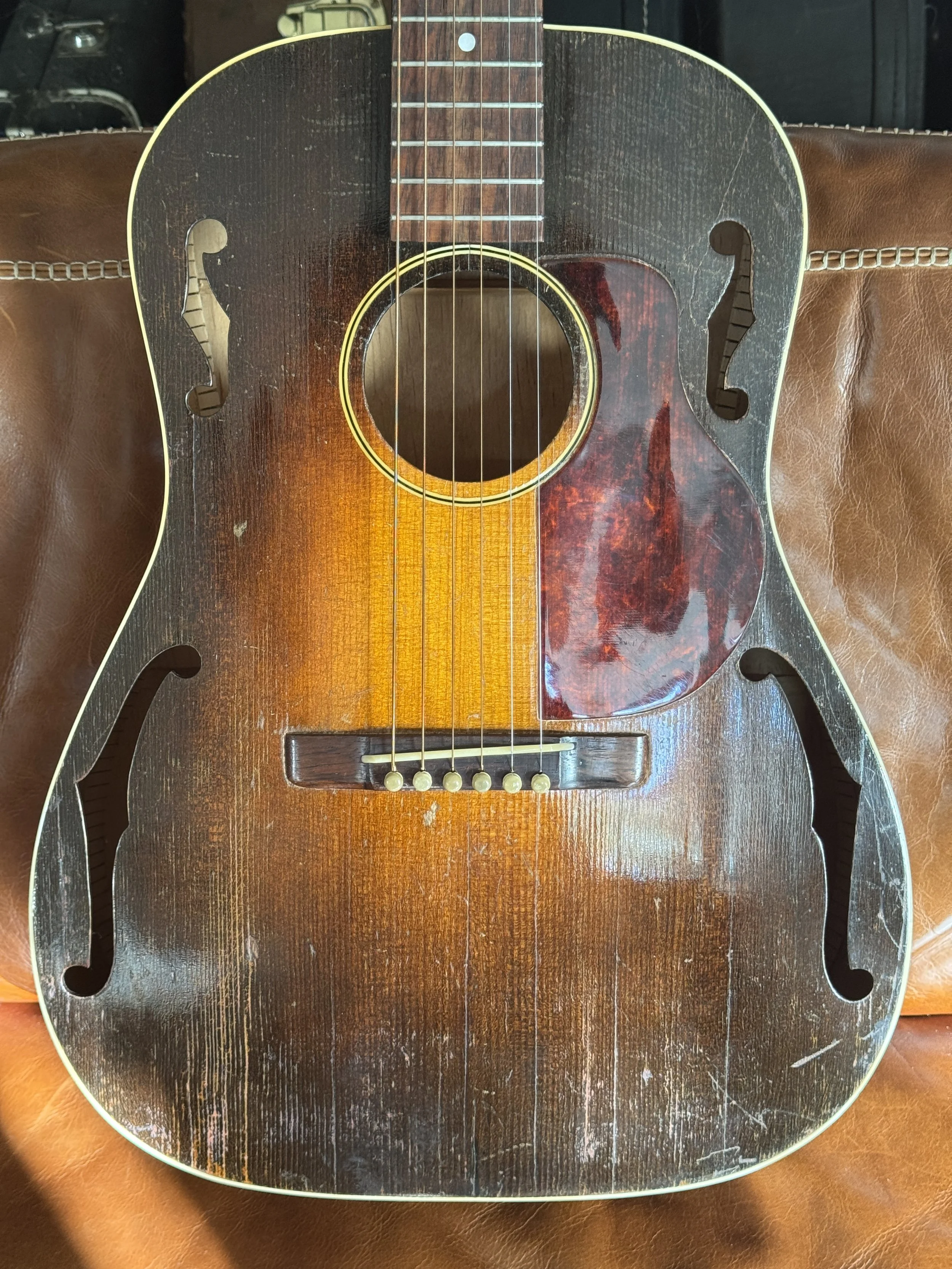
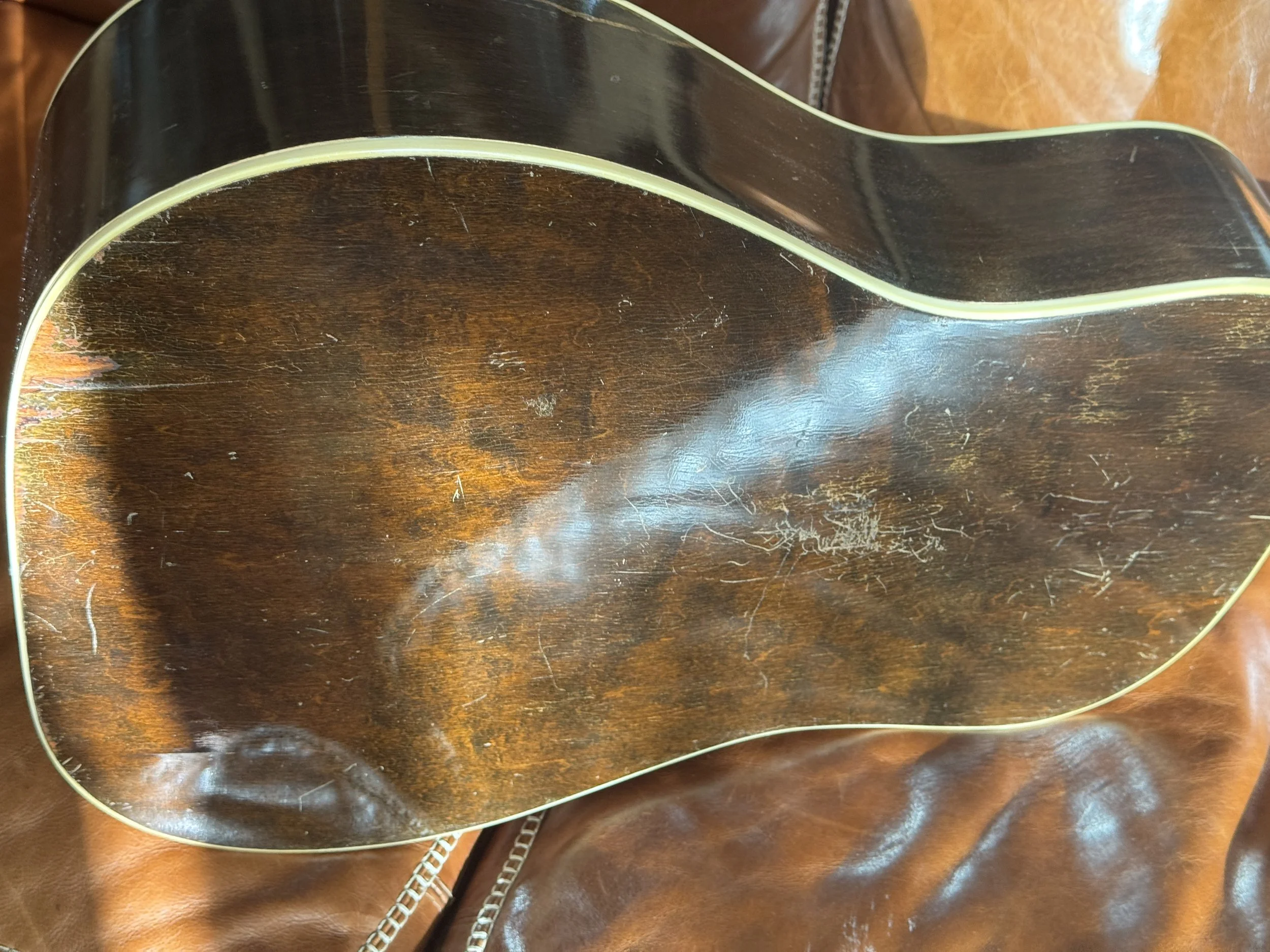
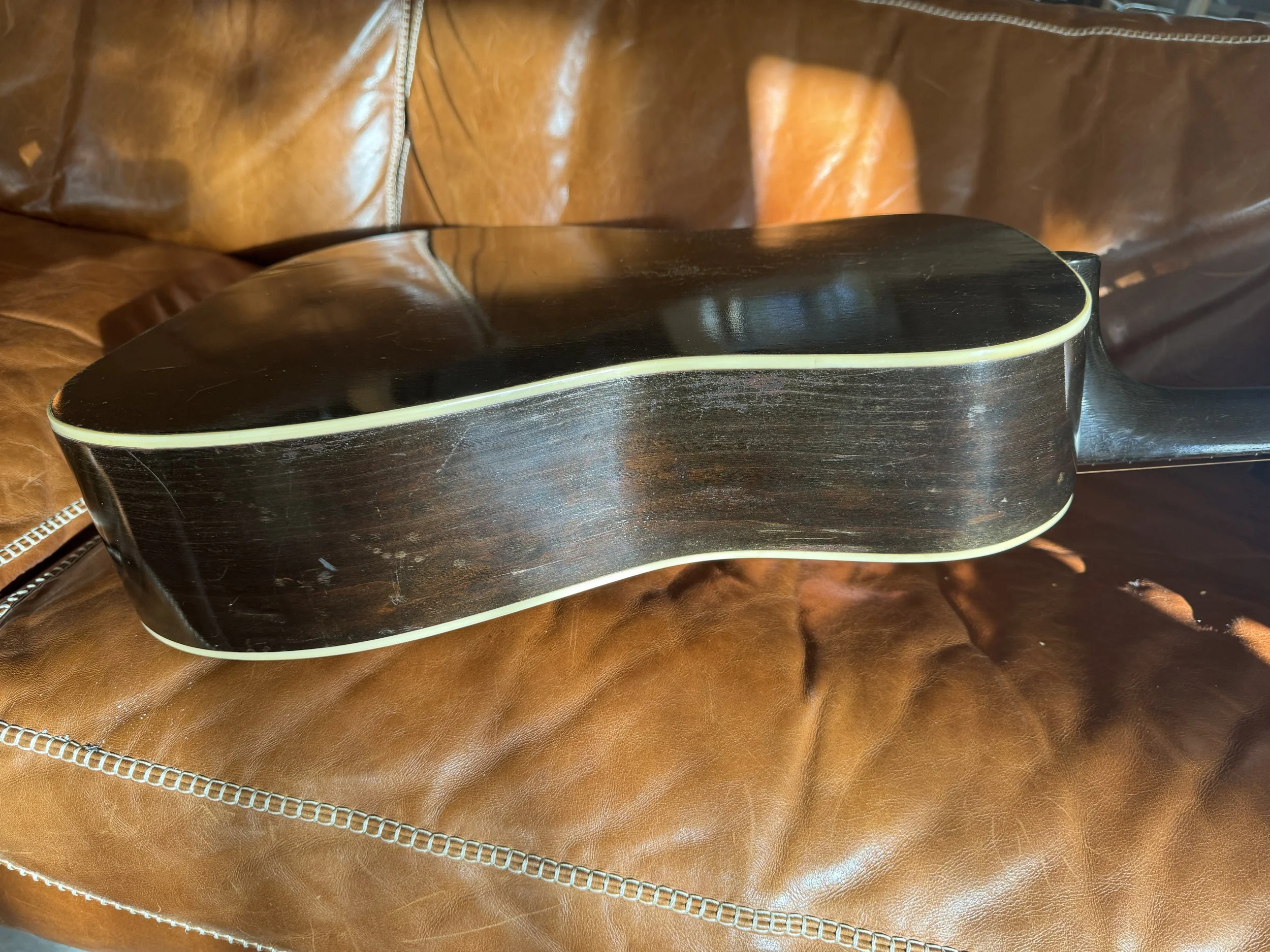
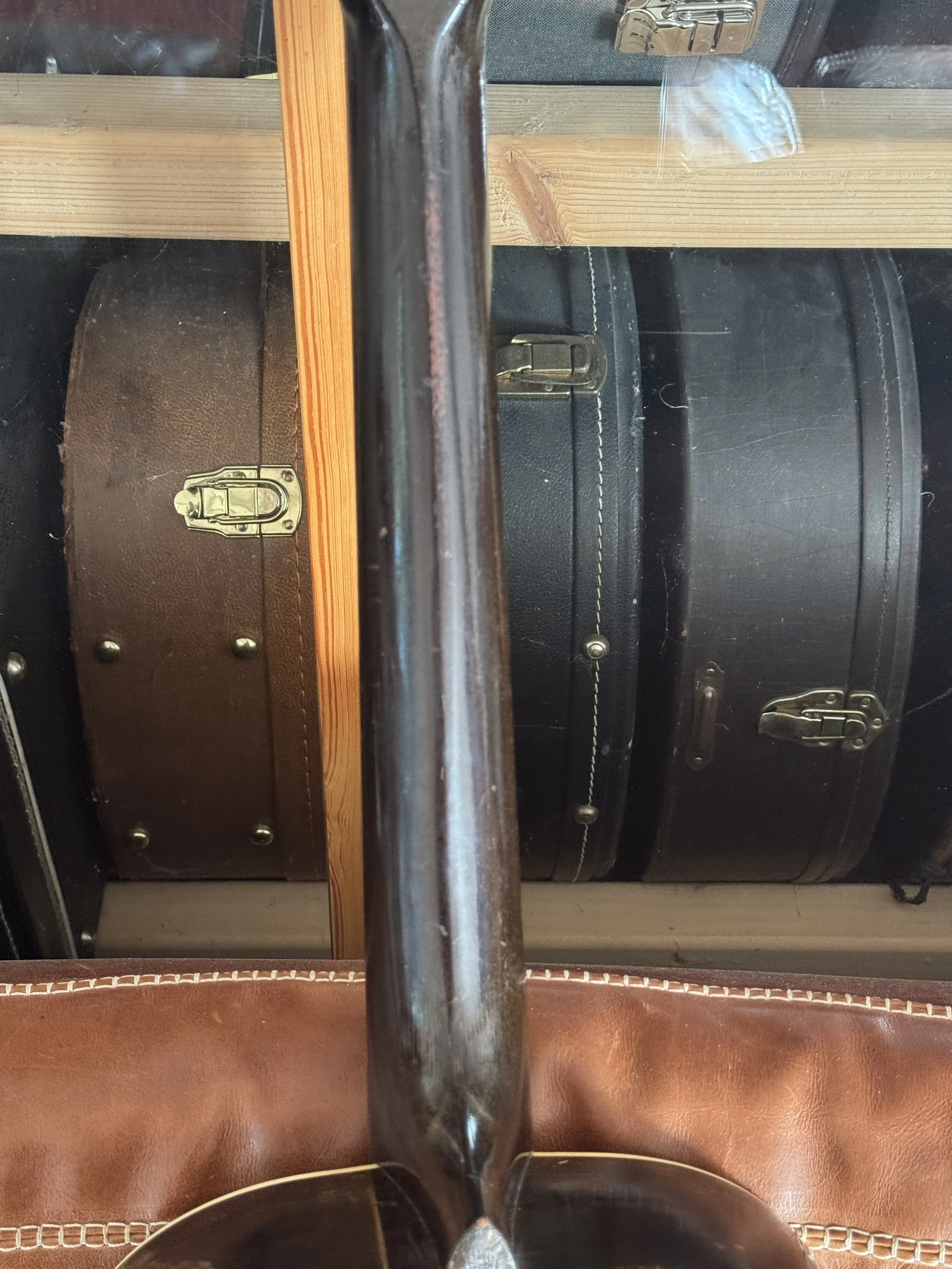
Gibson HG-22 , 1931
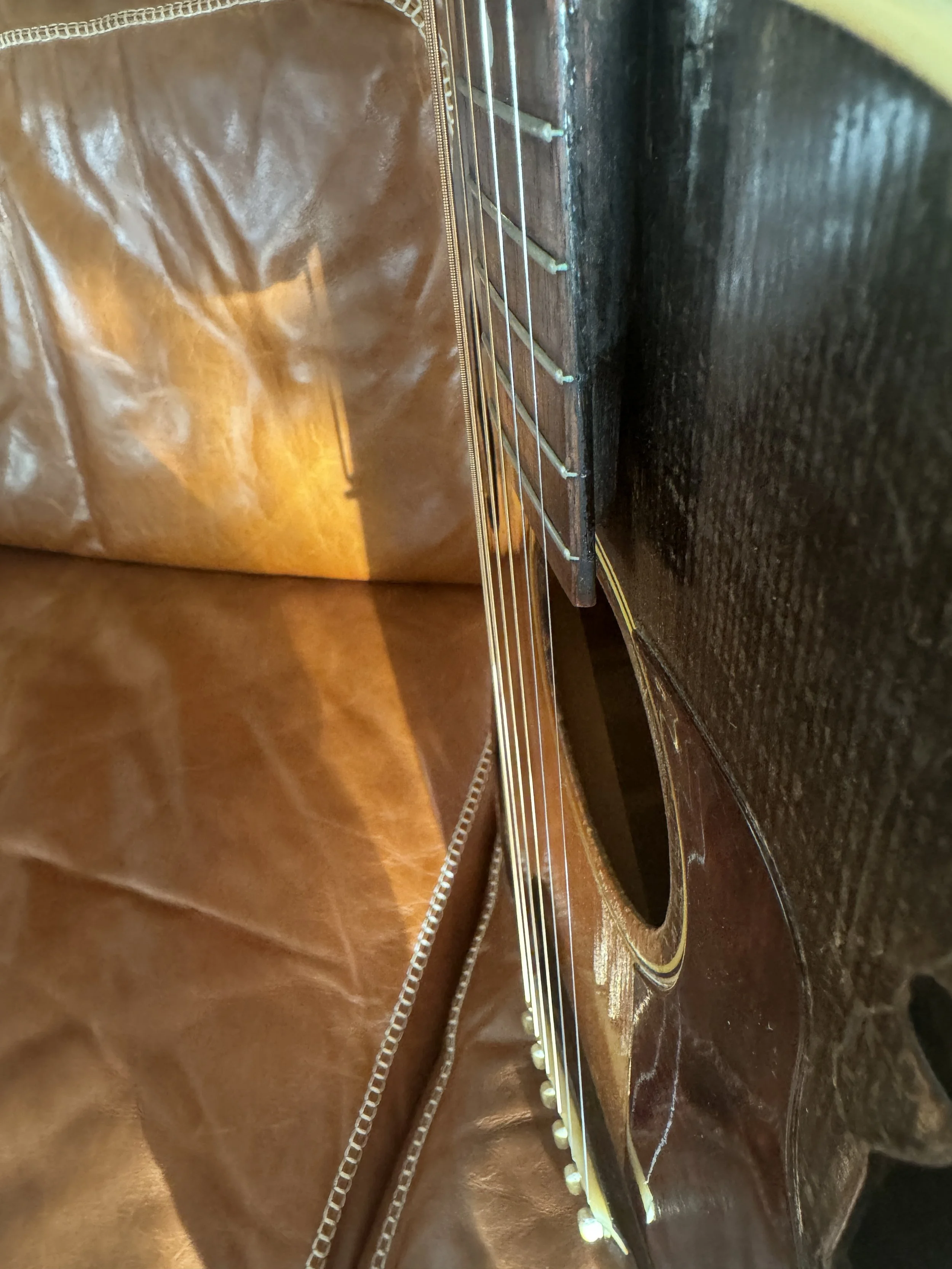
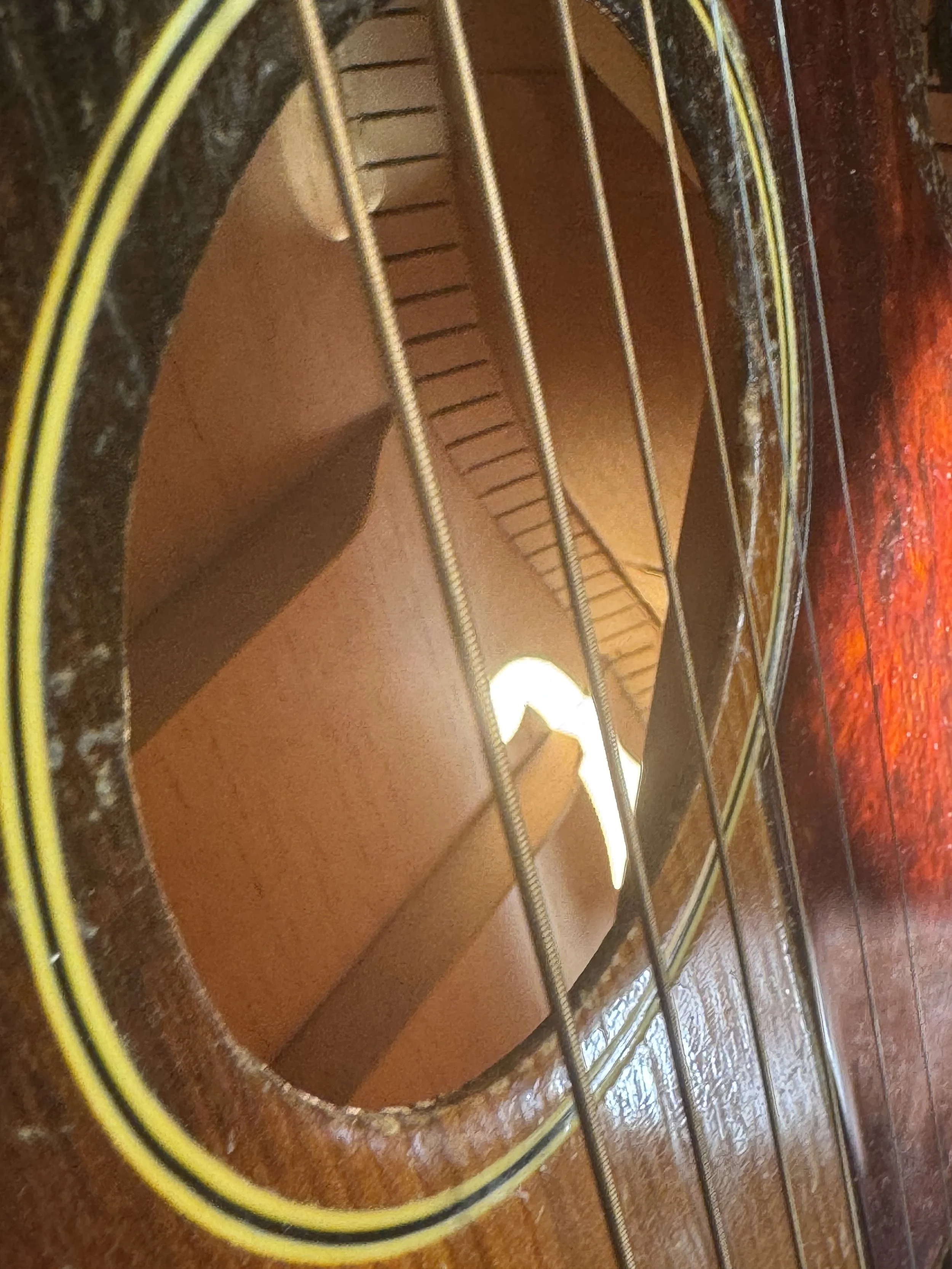
This is actually a very interesting guitar. Built in 1931 by Gibson, back then it was another, not very successful construction, trying to make acoustics louder and give them a mid and high push especially for slide and blues guitar and most of all, against banjos in ensembles. They added a somehow second body so called buffles half an inch next to the sides, inside of the guitar to amplify especially the mids and the highs, in other words, trying to help this frequencies to cut through backing bands, while soloing (slide) without electric amplification. The price you pay is a significant loss of warmth and bass-frequenzies. Maybe the reason for the failure of this model in those times. After only three years the production was stopped.
But.. the bigger model of this kind, the HG-24. Already had the size of the later Jumbo, that came 1934. Take out the buffles, forget the f-holes and you have a 16’ Jumbo.
When this guitar came to me, the top was sunken in, the cross-bars broken, the buffles loose. After examining the instrument thoroughly my luthier Thomas Amberger and I decided to take out the buffles , repair/replace the cross-bracing to find out what this instrument would sound like without the built in “amplifying”. By the time it was built, this guitar likely had the biggest body size ever built by Gibson so far. Somehow looking like a small dreadnought. Built very light all over. Like any other Gibson guitar with spruce-top and maple body, without the buffles it should produce a very warm and woody sound with a broad projection and clarity anyway, this was our theory. After doing this we found out, that we did the right thing. It might not be original now, but it has emerged to a full sounding, versatile vintage instrument for slide, blues , fingerpicking. A, so to say, small Gibson dreadnought with all the advantages of its size . With its extra f-holes, it is very a cool looking and rarely seen instrument for blues and ragtime-players.
In its current condition it is, I would guess a “one of a kind” guitar.