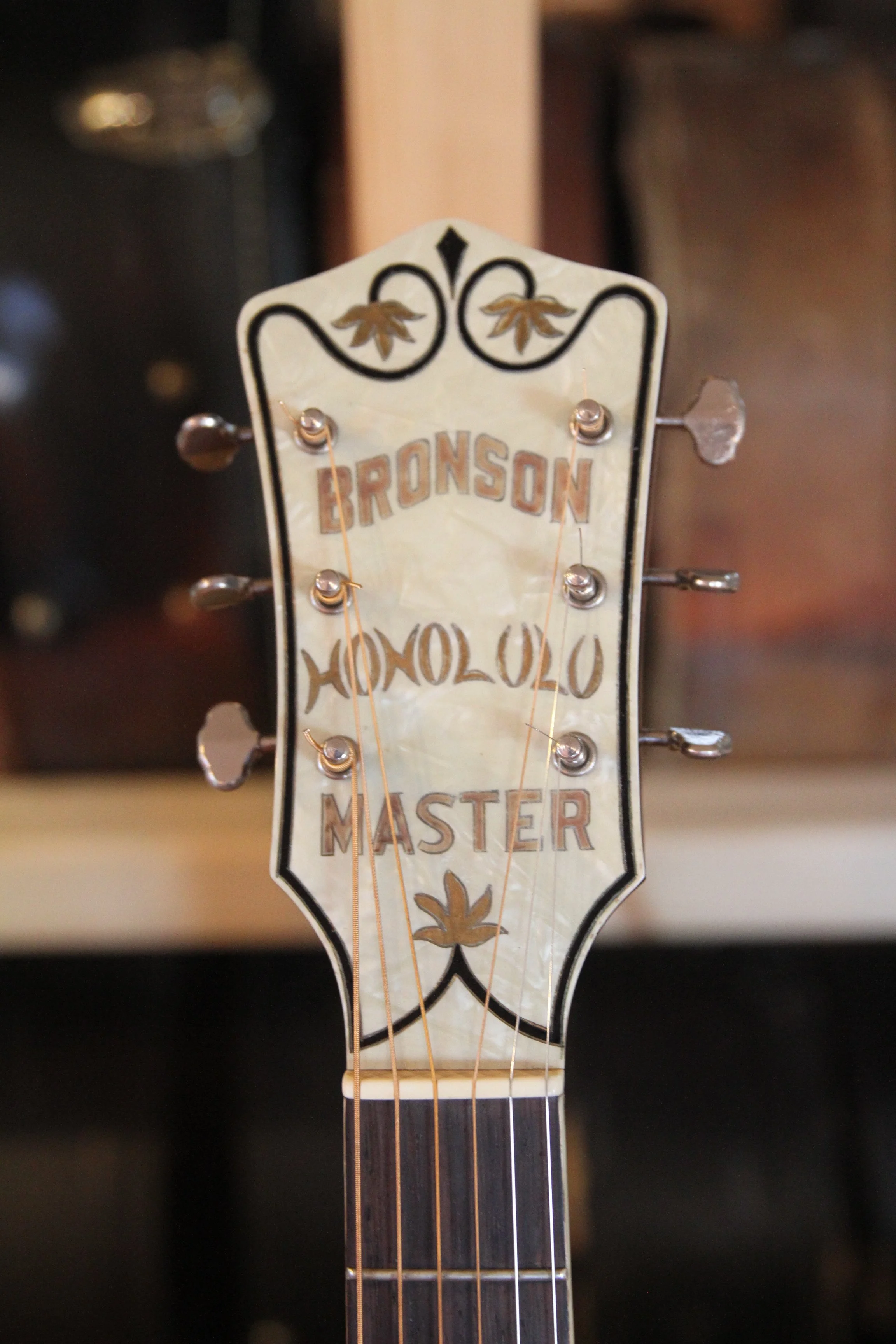
Bronson Honululu Master o0, 1936 converted
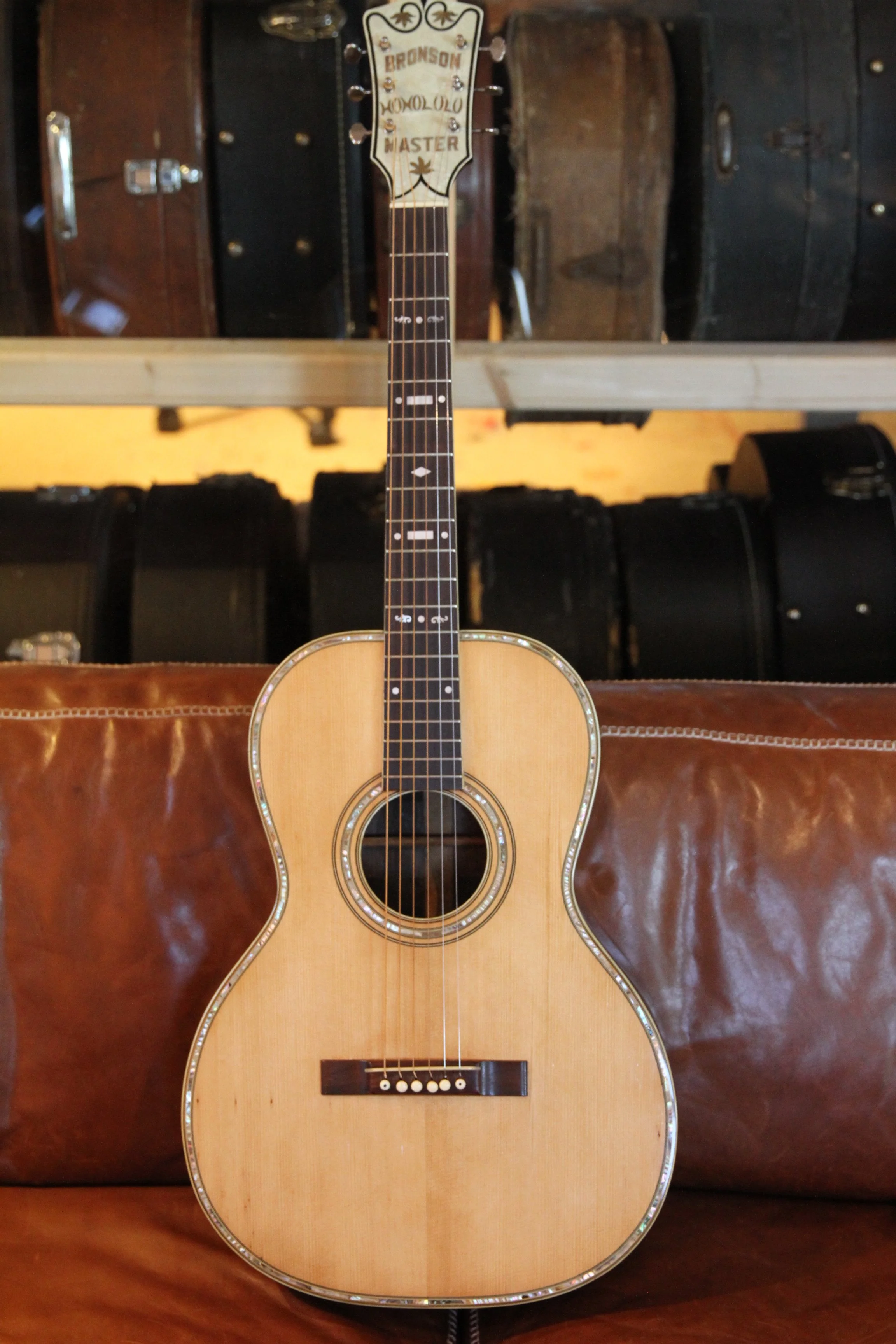
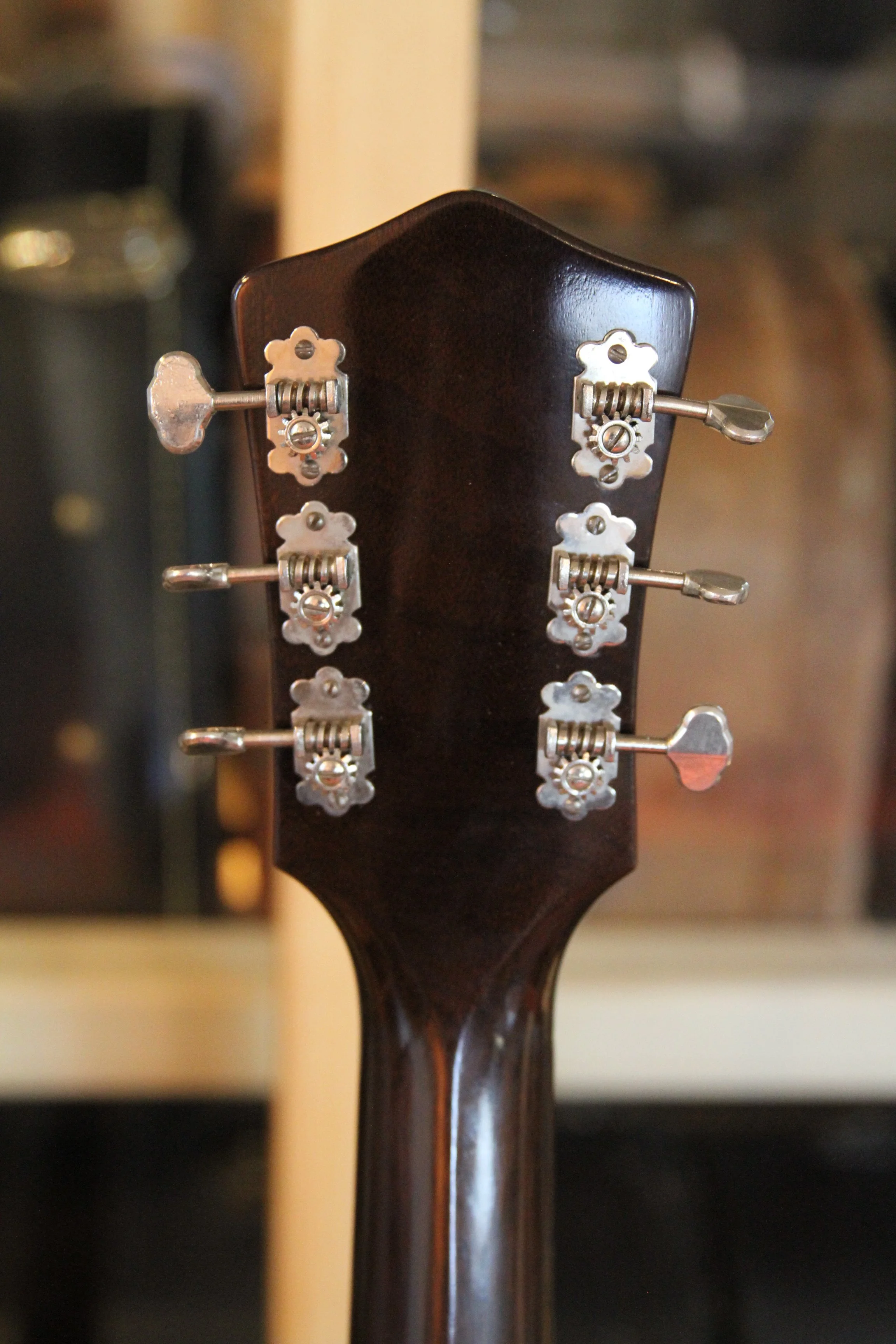
The „Bronson“ brand is an offshoot of the Oahu Publishing Company, the Bronson brand was created after a parting of ways of Oahu's two founders who were brothers. Both companies offered instruments built by one or two of the larger Chicago instrument manufactures, and most of these guitars were square-necked. This particular Honolulu Master began life as a Hawaiian square necked instrument, but has been converted for standard "Spanish" playing years ago by the previous owner..
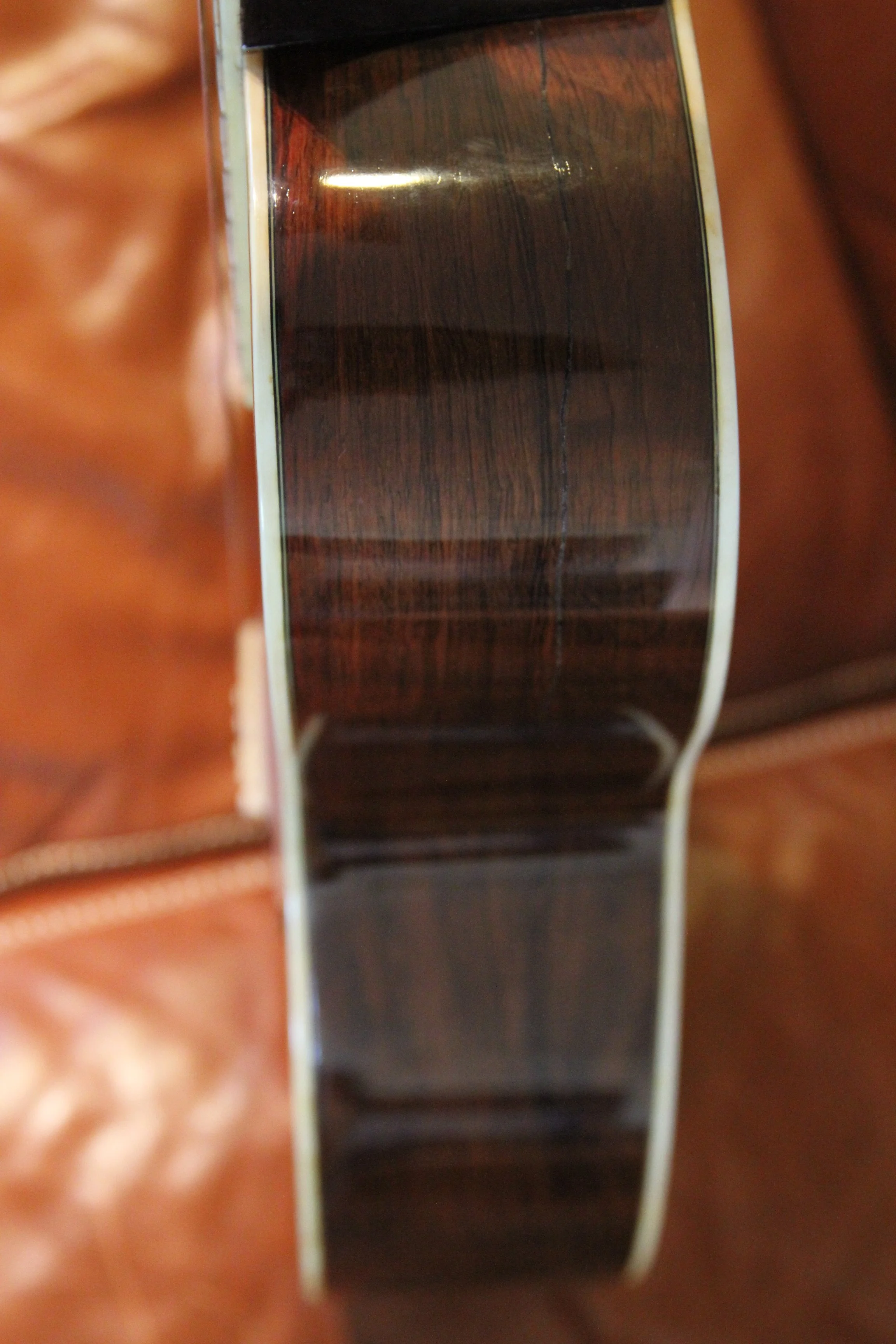
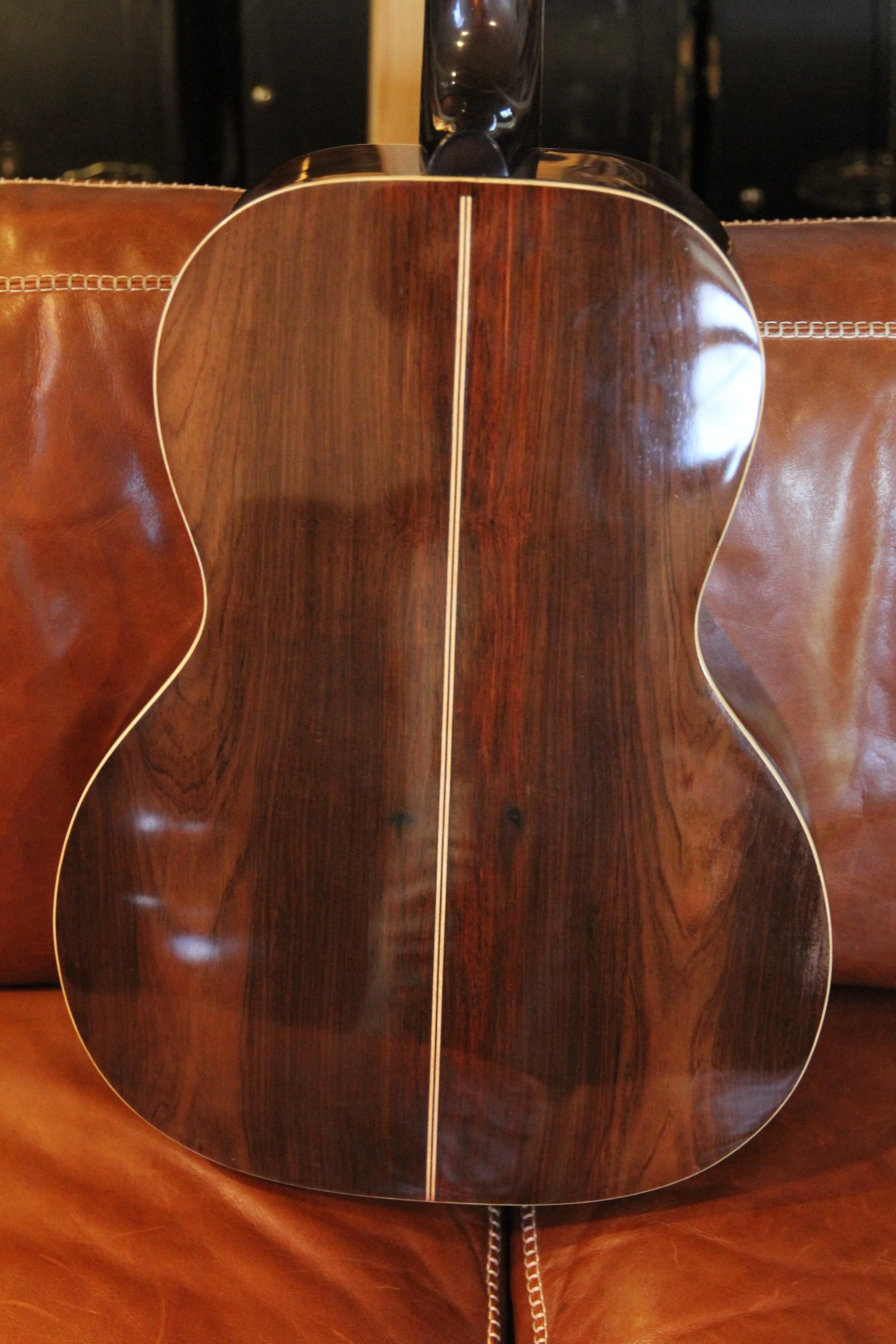
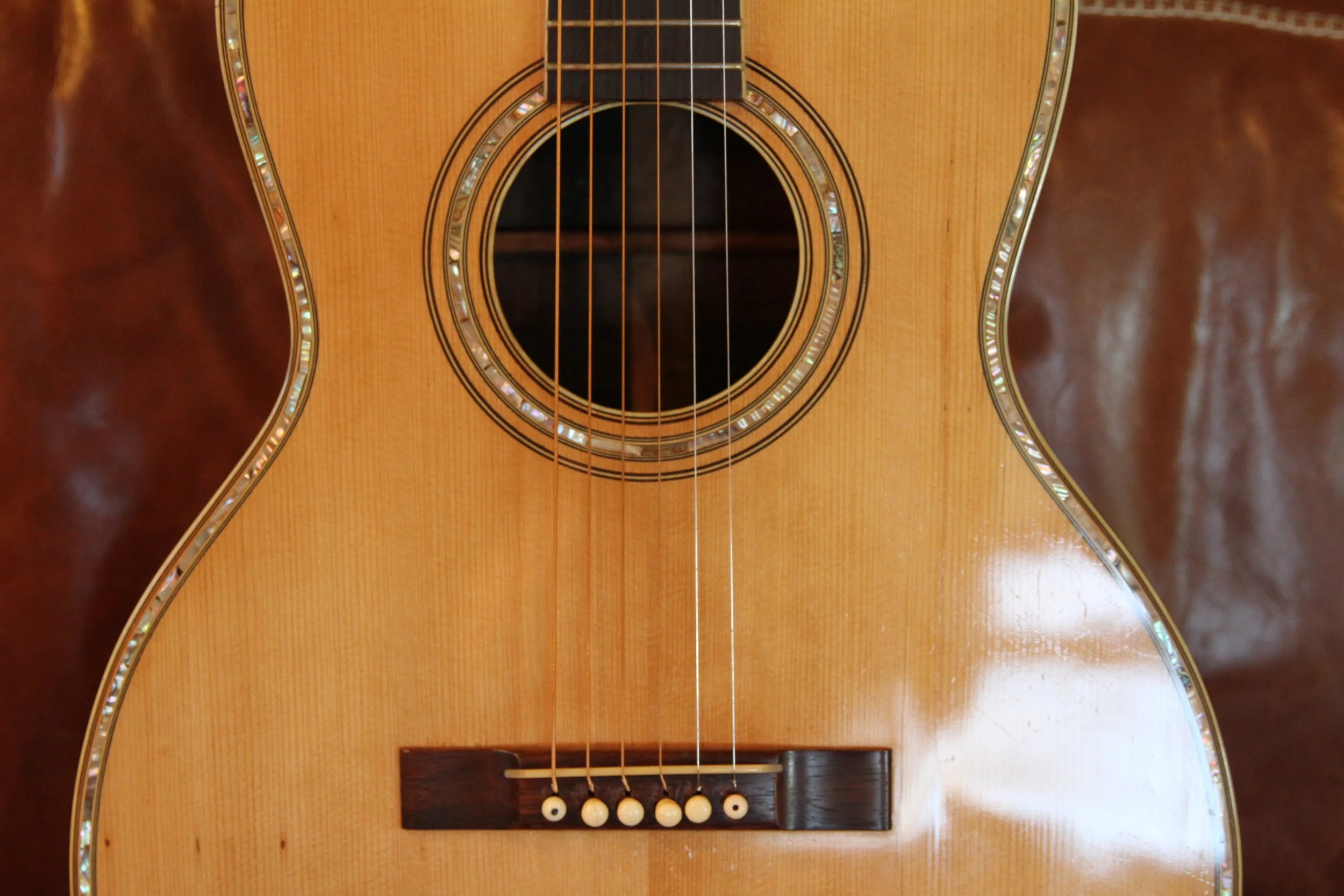
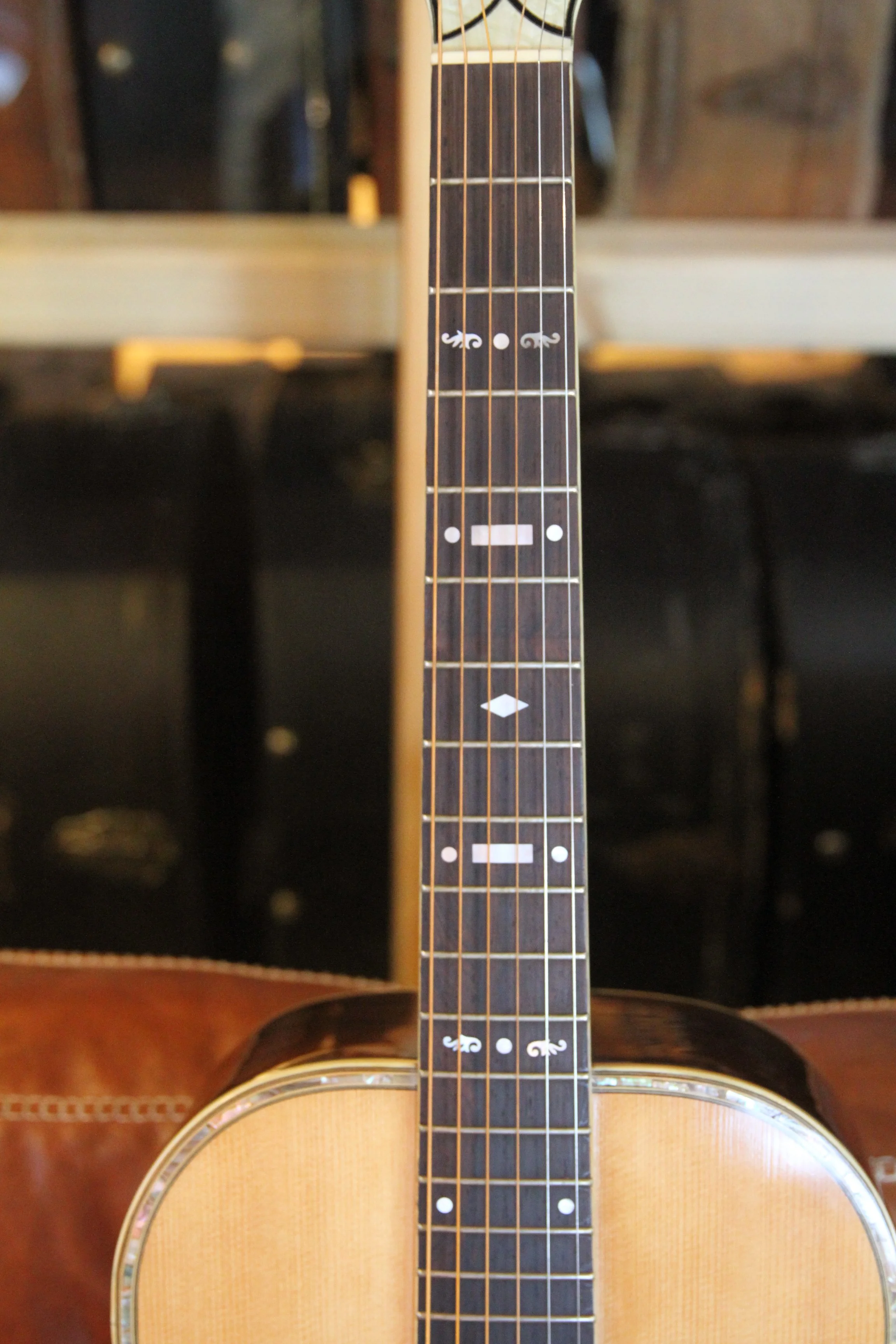
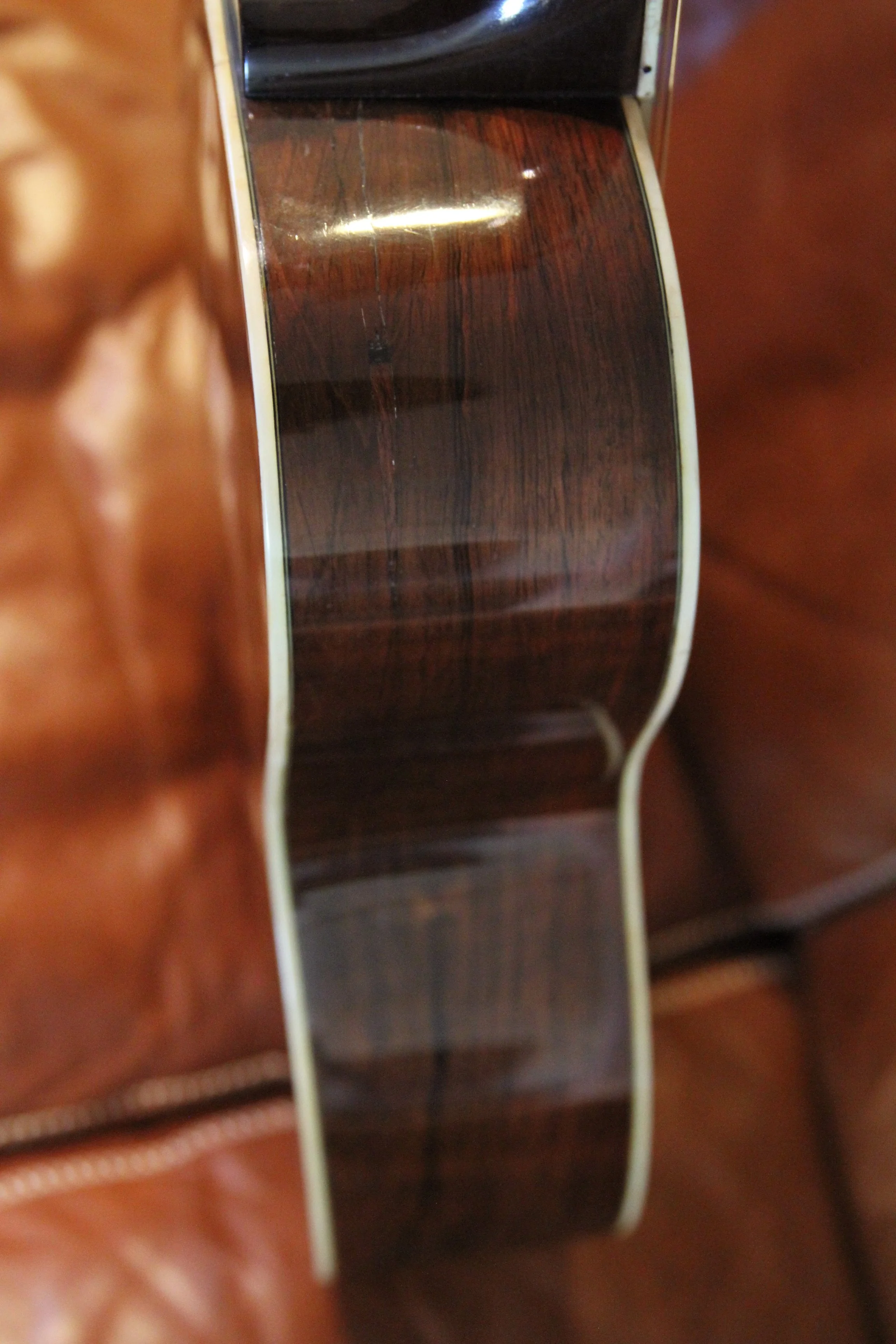
Built by Regal or Kay in the mid to late 1930's, the Honolulu Master features a deep-sided 00+-sized body,14 5/8" lower bout, dimensionally similar to a large body Gibson Nick Lucas. The back and sides are nicely figured old growth brazilian rosewood. The Adirondack spruce top features a unusual single-X bracing pattern, Regal and Kay did use for a few of their upper line Dreadnoughts and Jumbo flattops. The body is finely built, with real pearl fingerboard inlays and real abalone top and rosette trim
Converted from square-neck, the current neck carve is round and medium full. In feel its closest comparison would be a mid 1930's Martin. Long 25.4" scale length, 1-13/16" nut. This instrument is fully restored and refinished.
It offers an interesting tonal twist on the Regal/Kay Tonk/Washburn sound. The deep body and rosewood combined with the X-bracing create and instrument with a darkly coloured tone, strong low-end and midrange response, and good headroom. The treble strings have a thick and round sound and good snap. All together, a versatile guitar capable of ragtime and blues, but equally G-chord ready.